Lazy Luddite Log

29.3.26

Stewart Punt Groove

On the corner of Punt Road and Stewart Street in Richmond is an unremarkable two storey brick structure housing a few wholesale shops or offices. Its roof is about level with the platforms of Richmond Station. It has sometimes sported a big billboard. None of this much interests me but what does is a memory of mine from ages ago.

What does ages ago mean? I would say it was the 2000s but it could have even been the 1990s. This is the problem with sharing an old anecdote long after it happened. But now onto what I'm remembering.

There was a band rehearsing or even performing on that dingy rooftop. The brick walls are somewhat taller than the rooftop itself and so provide an effective railing for anyone standing there. There is also a shedlike structure on the roof which I'm guessing covers a staircase. And I recall there was a drummer, a bassist and a guitarist. Were they jamming or playing rehearsed compositions? I cannot say now but what they played sounded to me like funk-metal.

I could see all this because I was standing on the northernmost platform waiting for a train. It was daytime but what I was travelling to or from I cannot recall. I went all over town back then. But it is a fond recollection of a remarkable moment. I enjoyed the show but expect I still got on the next train once it arrived.

I'm now spending less time at Richmond Station because of the Metro Tunnel so I suppose this memory is now even more nostalgic than it was.

Corner of Stewart and Punt

Labels: , ,

25.5.25

Encore

Was there ever anything you had to do that you turned into something you wanted to do anyway? This has often been true of me. Way back in the mid-90s my teacher-training included designing some exercise demonstrating the value of diversity. At that time I was also delving into the history of popular music. The result was an activity in which students would put together the most diverse and therefore best band of musicians.

The play-test of this activity had a luke-warm reception from a group of teens. The teacher-trainers felt similarly. Feedback however was vague - teacher-trainers only sometimes practiced the constructive criticism they advocate. I can guess at a few things however. One is simply that adolescents are difficult to engage from the position of having never met them. Another is that even then youngsters were less into bands than they were solo performers or dance groups. Also maybe I was mistaken in thinking musicians are remotely as engaging as the music they produce. As for the adults in the room? Possibly they felt that the diversity I was show-casing was too functional - mixed skill-sets offering consumers something enriching was possibly too pragmatic for my idealistic mentors. And then there was my production values.

All that is left is a set of basic sketches of an imaginary band called Encore. I came across them in my concertina file and decided to share them here. They contrast with my AI-generated Sub-Culture Kids Action Figure Selection. They are basic but I feel they convey what I imagine is a band I would enjoy following. Encore is indeed diverse in gender and background and with my vague grasp of fashion I also suggested a mix of musical influences within the group. But most importantly for me is a selection of instruments that will each sound distictly even once played together. I think I need to go to more gigs. Encore

Labels: ,

28.7.24

Radiooooo

Radio but with the last letter written five times. This is the name of a website that serves as an online radio station with content curated by its membership. The interface very quickly tells you what it offers. There is a world map and a sliding scale of decades from over a century of recording. Using this you can hone in onto any offered time and place and then listen to the music of various artists. I tend to focus on the 60s-to-80s but let the world be my musical plaything. At other times however I just let the website do its things so that older and newer tracks are played too.

Here I will laud just a handful of the tracks I have discovered at Radiooooo. In this process I have found that the past is rich with new content. Much like history, there is always something more to find. But I will start with one newish track it played to me.

Disco Man (2021) by Remi Wolf is surprisingly joyous. The tense gloom I have noticed in many pandemic-era tracks is refreshingly absent here. The singer eschews such a pose in this song and you get a sense of gay abandon in celebrating the fun of the now. But sometimes I do enjoy the depiction of other emotional states.

I never knew of Labi Siffre and with songs like Cannock Chase (1972) we are given melancholy with a hint of hope thrown in. It is both heartfelt and beautiful. He seems a rare and overlooked singer-songwriter from a time in which others like him were dominating the charts.

I did know of Eartha Kitt and with tracks like Whatever Lola Wants (1962) we get a seductive yet quirky delivery that is all her own. She was much more than just Catwoman or the wise elder from Erik The Viking.

But now I move away from the Anglosphere. And yet English creeps into songs all over the world. Nice Mover (1979) by Gina X Performance says nothing of much consequence in English but this only accentuates its status as a quintessentially German New Wave track.

Zindagi Meri Dance Dance (1987) by Alisha Chinai & Vijay Benedict is in Hindi but every now and then the Bollywood singers say cute things like how they want to sing and dance on either Mars or Venus in very crisp English. This is lots of fun.

Songs that are mostly in another language but then present a short English phrase can have varying effects for the Anglophone listener. In French Graffiti (1975) Jane Birkin sings breathily in French but towards the end suddenly says "I want to be fucked by you" in English and it really gets your attention.

Eventually I escape English entirely but sticking with French for a moment - Lindberg (1968) by Robert Charlebois & Louise Forestier from Canada - what is this song? I cannot tell but it is compelling.

Ma Beham Nemiresim (1973) by Googoosh from Iran is likewise compelling. She seems to be singing of something important and tragic if only to the singer of the song. It feels exotic and timeless.

Rozy (2013) by Dakh Daughters from Ukraine presents the wild chants and beats of an alternative circus raging for a better world of both free nations and free individuals.

La Zarzamora (1974) by La Grecas from Spain seems to update Romani music with a pysychedelic groove but I cannot say much more as a lot of these tracks are obscure even in an era of instant information access.

Radiooooo also offers something the charts rarely have - instrumentals - and I find some of the best come from Brazil. Summertime (1971) by Rosina da Valenca and Bebe (1972) by Eumir Deodato really are an aural balm.

I lack eloquence in much of this post because music is something that resonates in a way that is difficult for the individual to reduce to words. I also feel this post is a bit short but that is because it takes time to actively pay attention to the data of tracks passing by on Radioooo. Its purpose is for listening and stopping to note names and dates interferes with that. Maybe I will add short paragraphs here from time-to-time.

One more thing Radiooooo lets you do is modify what is played with controls dubbed 'fast' and 'slow' and 'weird'. And yet I find that it is never too frantic and rarely ever mundane. What one gets in summation is a somewhat surreal yet centering musical experience of a past that has never entirely gone but is just around the corner. It is like a space-time cabaret and a wonderful way to explore a whole world and century of music. I use it regularly as a supplement to my own collection.

Labels:

26.7.23

Queen Song Linkages

As a Queen superfan I'm familiar with all original studio recordings of my favourite band. One thing I noticed was all the cross-cutting connections between songs both within and between albums. Of course, you can find similarity between any two things, but here I'll only touch on what seemes more noteworthy to me.

Some connections are well-known. We Will Rock You and We Are The Champions from 1977 go together on both album and later Greatest Hits. As a result they tend to be played together on both radio and at sporting events. Was this intended by song writers Freddie Mercury and Brian May or did it just take on a life of its own?

Another one many know of is Bicycle Race and Fat Bottomed Girls from 1978 each name-dropping the other - we are told that "fat bottomed girls will be riding today" and they are later exhorted to "get on your bikes and ride" - lines that make me smile.

But there are other more obscure links I enjoy. In 1974 Queen released two albums. Seven Seas Of Rhye ends the first album with a bunch of friends singing I Do Like to Be Beside the Seaside. Brighton Rock starts the next album with somebody whistling the same old tune to a background of carnival sounds.

So far these are all deliberate associations on the part of the band. Others are more incidental observations. The Prophet Song (1975) is known for a kind of round sung by Freddie Mercury with echos of himself but the same trick was performed on guitar by Brian May back in Brighton Rock.

Some of the oldest Queen discs were almost concept albums suffused with common themes and moods. A lot of progressive or glam acts were into science fiction but Queen seemed more into fantasy - look no further than the amazing White Queen and March Of The Black Queen (both 1974).

Most of this fey vibe was set by Mercury and May while Roger Taylor tended to interupt it with songs describing the everyday life of young to aging rock-and-rollers - check both Tenement Funster (1974) and Drowse (1976). Once John Deacon got into writing he diverted things further with the most cheerfully love-struck of songs - consider You're My Best Friend (1975) and You And I (1976).

Sometimes one song seems to be a test-run for another one. The magnificent Death On Two Legs (1975) seems to musically evoke silent era moustache-twirling villains but then so does Flick Of The Wrist (1974) and I dig both. At other times a song harks back to a more successful one - Man On The Prowl (1984) belongs on the same jukebox as Crazy Little Thing Called Love (1980).

A ran this topic by a friend with huge technical understanding of music and she talks of songs linked by common chord progressions but such things are beyond me. I can however discern and name musical genres. One easy way to find song links is to follow the interest in particular genres by different band members. Mercury flirts with jazz on tracks like Bring Back That Leroy Brown (1974) and Good Old Fashioned Lover Boy (1976). May does a similar thing for folk with '39 (1975) and Long Away (1976) and both also hint at his love of astronomy.

Band members had particular preferences - May and Taylor always loved rocking guitar and drums while Mercury and Deacon were drawn ever more to soulful vocals and base lines. However they also influenced one another. Metal was always in the blood of the band - examples can be found in both the 70s (Stone Cold Crazy) and 80s (Gimme The Prize). But they played with all manner of genres. Funk is one of my favourites and cool examples include the studio crafted Another One Bites The Dust and the more jam-like Dragon Attack (both from 1980).

Over time Queen moved away from concept albums and eccentric variety but never entirely abandoned these characteristics. There were albums associated with the movies Flash Gordon (1980) and Highlander (1986). Innuendo (1991) resonates with otherwordly atmosphere. And there are still connections here and there. The songs She Does Me (1989) and Delilah (1991) are both likely about the cats that were constant companions for Freddie in his dying days.

Even the posthumously constructed album Made In Heaven (1995) feels more coherent than it should be, given it drew on draft or solo tracks from over more than a decade. I suppose that is simply a testament to the talent and inspiration of all members of Queen working together.

Labels:

27.7.22

Music Sources

A decade ago I made a large party playlist of tracks representing four decades of popular (if sometimes eccentric) music. More recently I decided to add another decade worth of tracks and found that the way I discover music had changed. Or possibly it had reverted to far older ways of encountering music.

In the family home the only radio that played was talk-back radio. There were, however, a few other ways to be exposed to music. School gave me a random mix of sing-alongs derived from nursury rhymes, golden oldies and footy anthems. Visits to shopping centres exposed me to whatever was charting or deemed suitable for shoppers. This included a surprising number of novelty instrumentals that tend to be dismissed as 'musak' today. But there were also pop songs by artists now all-but-forgotten like The Captain And Tennille. Added to this were television ads for record compilations of easy listening favourites by the likes of Nana Mouskouri and Kamahl. Indeed the selection wafting on the waves was surprisingly multicultural - moreso than a contemporary perspective would imagine. But TV was more important for me in another way.

TV themes and movie scores were possibly the biggest part of my childhood musically. And before the 90s they rarely pushed cross-promotional songs. Once more instrumentals were central to all this. And it was via this medium that I developed a taste for folk, classical and jazz. This was all pretty passive listening however. It was only in my mid-teens that I started following the charts from a mix of TV and FM radio.

I first watched Rage at a sleep-over and from around 1888 to 1992 I actively watched such programs and tuned into hit stations (for which we had a stereo 'boom box' added to the household inventory). After that my explorations continued to be deliberate but diverged into two parallel tracks. Have I related that here in another entry? Sorry if I have.

One track was to notice whatever my uni friends were into and played at parties. This took me away from charting songs and into the tastes of various sub-cultures from goth to feral. That was interesting as some things I assumed were new and very 90s were in fact 80s but innovative (like Violent Femmes). This went on for a while and involved a lot of sharing of CDs till the era of online music access.

The other track was possibly started by a coffee table book I came across on the history of rock-and-roll. In its front cover was an overly elaborate 'family tree' of popular blues-based genres and suddenly I was hooked into exploring this history. Another thing that reinforced this was an excellent BBC documentary series Dancing In The Street. The focus of such history was on artists who may have been popular but were also deemed important in the development of those various branching genres. This then became a big driver of my tastes getting older at the same time I was also keeping track of current trends. My 90s were as much about the 60s as they were of themselves. Since then I have lost touch a bit.

Younger friends allowed me to keep somewhat abreast with newer artists into the present century but I will admit I lack interest in the newer iterations of older forms. And so in expanding that playlist to cover five decades I fell back on those older childhood sources of music. A few tracks come from movies (like Skyfall by Adele) while one or two had been played in shops (like Cool Kids by Echosmith). To find songs that fit in with the older selection I also hunted for tracks by newer bands who played in a consciously retro way (like Panic Station by Muse). Then there were new tracks by old artists (Sting and Shaggy collaborated on an album and that was a fun discovery made for my by the YouTube algorithm). Finally I wanted a bit more linguistic diversity to match my existing variety of genres and drew on artists like Youssou N’Dour, Tarkan and Kyara Pamyu Pamyu.

I think it worked. It could be worth continuing this practice to stay even somewhat up-do-date. On the other hand things have changed now. Media fragmentation means that we are losing a common experience of music most everyone knows. If that is so then maybe my preference for stuff that was good then and is still good now is just another part of that fragmentation and that is as okay as any of it.

Labels: ,

29.2.20

Sweet Concord

I usually discuss music itself but here I will look back over my experience of attitudes to music. Each of us has distinct musical tastes and yet one thing we all share is that we are all into some kind of music. Well most of us anyway. "The man that have no music in himself, nor is moved by concord of sweet sounds, is fit for treasons, statagems and spoils" according to Shakespeare. Well, I'm keen on music both sweet and savoury but I get his sentiment. Music seems like something fundamentally human. And yet I have met the odd person who seems to lack that. Or if they are at all into music it is for its non-musical aspects - consider the comedy of Weird Al Yankovic. But that is rare and for most of us it is differences over which music we are into that can be striking.

I have long been puzzled by musical snobbery and narrow tastes. However I have been guilty of these in the past. A big one for me was the dismissal of electronic music. In feeling that way I was following my nerdy university peers. Eventually I realized that was a flimsy position to hold while also loving electro-magnetic amplification. The old acoustic purists of folk and jazz had firmer ground to stand on. And yet even they would listen to recordings of acoustic music. I think our underlying problem with electronic music back then was its new and growing application as dance music and its excessive repetitiveness. However since then I have enjoyed the same mesmerizing repetition from a band jamming for a writhing throng. Iteration can serve its purpose very well.

Criteria for judging music are subjective. I object to cultural relativism in relation to human rights but for something like music it makes more sense. We could say that complexity makes music more challenging to play and more rewarding to consume but that is just a definition we set for ourselves. And many of us apply such criteria selectively so that our emotional preferences are favoured. Thus we re-cast our favourite music as the best music.

By the time I got involved with choristers I was thoroughly into popular music. I was therefore a bit wary of musical snobbery among these classical and theatrical enthusiasts. And yet what I discovered was more acceptance of music in its variety than among Korner friends. I felt relieved by an opera student among them putting on Shaggy while dancing about cooking a dinner.

If anything, I find that the more musically versed a person is the more accepting they will be of all kinds of music. Possibly a part of this is that they have a greater curiosity for music. This contrasted with the lack of curiosity I observed among others in my younger days. It was a common thing for someone to have an album, possibly a movie soundtrack, in a genre such as blues. It would be much played and yet was token because they never bothered exploring the genre beyond that.

This has changed more recently with friends getting the memo (aka meme) that diversity is important. Lists of artists of different backgrounds that one should patronize have circulated. I never had to try because diverse genres result in a diversity of artists. Variety is the spice of life and I hope those lists promote enjoyment rather than just a sense of worthiness.

Another recent trend is the tendency to critically scrutinize lyrical content for its lack of ethics. I’m wary of this because I think we are foolish to conflate depiction with endorsement but, even if there was something to this, I find the standard is applied selectively. The songs of daggy old popular artists in particular come under fire, while the intentionally offensive content of some alternative acts somehow gets a free pass. Once more the issue is subjectivity – we like whatever we happen to like and rationalize it as something more than that.

If I need to improve my own listening habits it is to try new music more. However there is so much music in every decade that I can discover new music in both the present and past. And if anything that stance is more common now than it once was. I get the feeling that the youth of today are more into the music of circa 1970 than the youth of then were into the music of circa 1920. Music of any era or origin can be worthwhile. Even if it cannot promote concord or hamper strategems, I still think it enhances our lives and our ability to cope with its challenges.

Labels:

25.3.18

Queen + Adam Lambert

Belinda did something very clever and got us both tickets to see Queen with Adam Lambert. It was a birthday present for me and came into effect several months later. It is something I would have never contemplated, partly because a habit formed in my impoverished youth makes me overlook all the live gigs I could go to, and partly because on some level I have always felt that it was too late for me to see Queen live. I had followed a cover band for a while (with the name Fat Bottomed Girls) and also seen the jukebox musical based on Queen songs (written by Ben Elton). However I had mentally relegated Queen concerts themselves to a past I was too young to have experienced. And, granted, what we saw recently was different from Queen in its heyday, as was acknowledged during the gig, but by goodness it was still a fantastic experience.

I started to get a bit excited about the concert a few days beforehand, but only in the sense that I was looking forward to a night out at a big public event at Rod Laver Arena. It was only really as the band members emerged onto the guitar-shaped stage that I was suddenly struck with the realization that Brian May and Roger Taylor were down there and all set to play the songs they had been playing my whole life and most of theirs. It was a moving moment for this long-standing fan and after a few songs it looked like Belinda sensed she was in the presence of musical greatness.

The band comprised Brian May (guitars and vocals), Roger Taylor (drums and vocals), Adam Lambert (vocals and cavorting), Spike Edney (keyboards), Neil Fairclough (bass), Tyler Warren (percussion). Brian and Roger are original members of Queen. Spike has been playing with Queen in live gigs since the 80s and is regarded by fans as the fifth Queen member. Original bassist John Deacon has been retired since the 90s but some of the songs he wrote with the band were in the set-list. The presence of Freddie Mercury (1946-1991) was felt both in terms of his absence and because footage (taken from the massive 1986 Wembley gig) of him performing was played on a big screen. This allowed for a vocal call-and-response session with the audience. Many of us found it rather touching. Camp young pop star Adam Lambert did a fantastic job of singing the Queen back catalogue. He has powerful projection and an impressive vocal range. He also has a definite stage presence and connected well with both band and crowd.

We were served a long and satisfying set-list of Queen songs (from most of their albums) and the audience got right into it. There was plenty of singing along (in the case of fans like me this included specific backing vocal patterns and hand claps). It was a stack of fun even from way off in the most distant seats. Amplification is vital to these big arena concerts but I'm happy to say it was only as loud as it needed to be. The screens were also very impressive and, combined with some artificial fog, produced a surprisingly realistic depiction of the big melancholy robot (from the 1977 News Of The World album art) bursting forth from back-stage.

There was some nice use of misdirection too. As we were watching some of this wizardry, an additional drum-kit emerged from the floor in the part of the stage that projected well into the ground level audience and looked like a guitar neck. There the stars of the show (Roger, Brian, Adam) gathered separately from the supporting musicians to play an acoustic set. This arrangement later allowed Roger to engage in a drum battle with Tyler. There were also electrifying guitar solos from Brian (naturally) and a bit of slapped bass from Neil. Adam sang a charting song of his own and now-and-then Brian and Roger took on vocals for songs they had written. Everyone was in fine form. I was particularly impressed with Roger both drumming and singing at the same time.

Possibly the nicest part of the night was Brian sharing a hobby of his - stereoscopic photography. With a specially-made camera he took three-dimensional selfies with the audience behind him. It was a very clever way of making a huge venue have an intimate moment. It was just fantastic to see these life-long musicians (with Brain and Roger pushing 70) still having a fantastic time sharing music loved the world over.

We both purchased tour t-shirts - I got one sporting the Queen band crest while Belinda got one depicting the iconic pulp fiction robot that was mascot of the show. It was a night to remember and also reminded me that sometimes there is still a chance to do something even if you think it has passed. I left the gig buzzing.

Labels: ,

25.2.16

Regenres

"She's making playlists. She likes to listen to MP3s when she hunts. It's like her own internal soundtrack, you know, dark core, trip-hop, whatever kids are listening to these days. Me, I'm more of a David Hasselhof fan..." - Hannibal King about Abigail Whistler in Blade Trinity

It is ten years since I posted this entry on the many-faceted history of rock-and-roll or blues-derived popular music. Here I will discuss whether I think anything much has changed in the decade since and look at some of the impediments to forming a coherent perspective on this topic.

One difficulty with mapping the family tree of popular blues-derived music is that there are far more names for sub-genres than I feel is warranted by sufficient musical differences (see also my description of genre-drift here). There are any number of terms ending with the suffixes 'core' or 'wave' or 'hop' and much of this drive to name things comes from the desire of musicians or commentators or even fans to identify something they love as distinct. In some cases the distinction is geographic - a music that is produced in the same manner on two sides of the Atlantic gets different names. In other cases it is generational in that a new term denotes a revival that lacks interest in its own heritage.

Sometimes there are musical differences but they are so minute as to make one wonder why they bother. In electronic music there is a tendency to distinguish sub-genres on the basis of beats-per-minute. But I have to ask - if you change nothing but the speed of a particular track then is that truly all it takes to shift it into a different sub-genre? If the change is sufficient to alter the experience of listeners (from the relaxed groove of reggae to the frantic skank of ska for instance) then that could justify a genre distinction. But just a tiny turn of a dial? I think the issue here is simply the clannish desire to belong to a unique scene or the corporate drive to sell something as fresh.

If you reject this degree of specificity you face your own problems. If I try and throw the net of definition wider and in a consistent way then I need to find or re-apply terms that in some cases are technically narrower. One case of this is in me using 'techno' to refer to all manner of electronic dance music. I acknowledge that it also refers to a more specific form and that my more general usage is something many other non-electronic fans do. But I'm still messing with words and in a way that may offend afficionados.

If I dismiss a whole lot of changes as merely new words for existing things do I then think that anything has changed in the decade since I published my musical essay? It will help if I can summarize the factors that help distinguish genres according to Musical Genres 1955-2005. They pretty much divide into cultural and technological factors (which in turn impact on each other).

The adoption of a genre from one culture by another will inevitably result in the older genres of that culture blending with the newly adopted genre. This is also true of sub-cultures such as youth scenes. Sometimes a cultural practice other than music will also come into play - hippy musos playing blues while on mind-altering drugs contributed to psychedelia. The economic circumstances of particular demographics also contribute - playing on crappy dime-store guitars or re-purposing record players as instruments contributed over time to a desire for deliberately low-fi production.

Instruments are a form of artifice so next we move to technological factors. There are many elements of a musical composition and one that is overlooked in defining genres is timbre. I find it important and so the kinds of instruments employed in producing particular genres is something I always listen for in a song. But I think it should take more than just substitution of the odd instrument and it should happen rapidly rather than with incremental slowness. Changing genre involves more than just auto-tuning your vocal recording.

All these potential changes need to pass the listening test. Texts can tell you a lot but do you think rock or soul sound sufficiently different from the blues? All-in-all I suspect that change across many characteristics is needed to justify a new tag. But I also suspect complete consistency is beyond my grasp. I will inevitably draw some lines more boldly than others as a result of my own preferences and vantage as an aging Gen-Xer. But it is time I made some substantive assertions.

* * * * *

A big trend online is to take two existing tracks and edit parts of them together into a new song. This 'mashing' rarely if ever produces anything new. Sometimes it will involve the mixing of genres but any newness is incidental rather than the emergence of a new fusion. But just maybe this mass of experimenters combining anything and everything will accidentally spawn a new sound that takes on a life of its own. I'm more inclined however to put trust in originality and a desire to express oneself personally rather than via the work of others.

The Internet facilitates all sorts of communication and even erodes the distinctions between different roles and functions. Someone with musical talent can now record a multi-track composition and then promote and sell it online. A new generation of popular singer-songwriters like Lorde have come along and what they produce tends to have an ambient quality to it (which may itself be a result of the sounds they can access on home computers). These artists can be their own producer and promoter which is a radical change in relation to an aging and sometimes stuffy music industry. This may be a more responsive way for humans to develop new things. However there are both trends and counter-trends.

It seems that everything new is old again. There has been a growing interest in older genres as exhibited by projects like Postmodern Jukebox. A hardcore song will be performed by a hillbilly folk band or a hip-hop song will be performed by a swing-era jazz band. However playing a song in a different genre simply shifts it to that other genre. Whether this development will produce new genres is yet to be seen. It is however an interesting trend and may have something to do with a growing desire for 'authenticity' in a managerialist and consumerist world. Possibly this is why we see such self-conscious retro experiments embraced by hipsters.

Another sub-culture I'm familiar with is nerds. They are playing a role in musical developments but this is arguably nothing new. 70s progressive supergroups were the invention of college students but they were never ironically or self-consciously nerdy - they just did what they did and they did it well. For self-aware nerdiness in music we can turn to the somewhat more recent New Wave scene in the 80s and some odd-ball groups (Devo, B52s, Oingo Boingo) fit the bill. Fast-forward to the Twenty First Century and nerd culture has impacted on a number of genres. Chiptune is a kind of techno that actively emulates the sounds of old computer games originating in Japan. However I feel some very old novelty tracks like Space Invaders by Player-1 or Computer Games by Mi-Sex did that too. The further back-and-forth you listen the more you can find that new things have incidental antecedents.

Something I think is new is dubstep. Distorting natural sounds has been happening for decades. Generating artificial sounds is almost as old. But the way dubstep sounds to me is like artificial sounds are made and then distorted. The effect is of an electronic monster molesting a dance floor. This is arguably another level of development in electronic music. The name of dubstep is partly derived from dub - a studio-based relative of reggae - but listening to it suggests it is more akin to some of the more severe kinds of techno that have been creeping into other genres since my youth.

Pop since the 80s has been partly electronic and that component of it has become increasingly central so that now the only way to distinguish many pop tunes from techno is to ask whether they take the form of a song rather than an instrumental. Is this a new genre? Or is it just an updated form of pop or a chart-oriented form of techno? Listen to the likes of Lady Gaga and decide for yourself.

Sometimes it feels like we have exhausted originality but I suspect that a continuing problem is a lack of global cultural cross-pollination. Even in the Twenty First Century music from beyond the Anglosphere only gets into our charts in the form of novelty dance hits or within underground world music scenes. Things are slowly changing however and once more the Internet comes into play. If an Australian is sick of charting pop they can always access Europop or Cantopop or any other international form.

Even so what they may find is they have traveled more in time that in space. I find that a lot of foreign pop simply sounds like the charting music of my youth. It is as if the rest of the world is a generation behind the trends of the Anglosphere. But maybe I need to look further and escape global pop to find traditional or alternative forms of music. The biggest resistance to such a habit will come from the desire to understand a song. I would argue that one can 'understand' an instrumental in terms of mood but some insist in singing along.

What I have been seeing in the past decade is different ways of producing and consuming, different roles and relationships, different atmospheres, but rarely much new musically. Most of the music we have now is a revolving mix of what we had in the past. We are looking back over a total of sixty years of musical diversification and I feel as if the first three decades were more productive than the next three. Once you account for the tendency to over-name sub-genres it seems that the development of distinctly new forms of music has slowed. At most I think the trends I have discussed will be the ground in which innovation will eventually arise. Time is needed to say more.

Labels:

30.9.13

Timbre

On the weekend I was sitting in a music classroom because it was serving as a changing room for a theatrical production I was in. There were student-made posters on the walls dedicated to particular elements of music – things like tempo and pitch and dynamic. I commented that my favourite was missing – timbre. This is my very layperson musings on that topic.

I once claimed to be a timbre junkie. The waveform of an instrument is distinctive and provides a lot of what distinguishes particular compositions and makes them into an aural banquet. I notice how much of the time different musical genres are defined by other characteristics. Some kinds of electronic dance music for instance are defined by beats-per-minute. If they stray one beat away from the proscribed range do the suddenly become something different? For me a lot of what helps me decide a song is what it is comes from the timbres it exudes. The presence and absence of particular instruments is important to me.

I should clarify that sometimes an instrument can be more than one instrument in terms of timbre. It can be played with a different technique which alters its sound. Or that sound can be distorted differently by amplification and recording. And it can all get rather confusing. I listen to some very old metal songs (the kind many metal fans think is just rock) and can be puzzled as to whether I am isolating an electric guitar or electric organ in my active listening. Or similarly in some old funk or soul I will be confounded as to whether I’m focusing on an electric guitar playing a rhythmic 'wakakakaka' or an electric piano (like the clavinet) acting likewise. My imprecision comes in part from the fact that all of these produce sound using moving steel parts and electromagnets. And whatever is making these sounds hardly matters as they all sound fantastic.

There are short-comings to my focus on timbre. If someone plays me a cover of a song using markedly different instruments I can have difficulty recognizing it even if the timing and notes are faithful to the original. Is this odd of me? I suspect it is a natural and common thing and I say that because of how important voices are to humans. Every person had a distinct voice and for us as animals living in packs it is important to recognize them. This gets back to music too – a key way to identify a particular artist is by the sound of the vocalist.

I prefer music produced by ensembles of instruments to a cappella music. Vocals are beautiful and allow for the addition of words to music but I also desire diversity of timbre. As such I prefer a band in which there are both male and female vocalists. Likewise a band that has a guitar and a keyboard is better than one with two guitars. Likewise a band which throws something like a saxophone into the mix gets my attention. I get annoyed if the bass player gets lost between cacophonous guitar and drums – hence production values that allow me to identify all the parts is a preference of mine. And finally this desire to distinguish all the instruments puts a limit on the sheer number of instruments I want to be playing all at once. Few if any bands meet all these descriptions and that is possibly why I listen to lots of various-artist playlists. That way the selection approximates the kind of band I want to listen to.

It is too late for me now to turn this into a project poster and put it on that classroom wall. Also I suspect it is too personal to be deemed informative writing (as well as too sloppy – that was a tiring theatrical weekend). Time now to listen to some more music.

Labels:

17.1.13

Mars

You may be familiar with Jeff Wayne’s Musical Version Of The War Of The Worlds (1978). It is an adaptation of the H G Wells classic science fiction novel War Of The Worlds (1898) in the form of a progressive concept album (which much more recently was made into a live musical). I enjoy the album but there is one part of it that has always annoyed me – the added epilogue.

The story is set in the time H G Wells originally set it but this epilogue has a setting contemporary with that of the music album or sometime in its future. In it the transmission from a NASA mission to Mars is suddenly interrupted and the sound effects used throughout the album to signal Martian presence echo and fade. This track was added, I suppose, to grant a contemporary relevance to the story and an ominous note to its ending, but it annoys me because if human civilization had been almost destroyed by Martians in the 1890s then the subsequent history of space exploration, and indeed the history of all sorts of things, would have been very different.

* * * * *

Imagine your world has been almost conquered by aliens and the only thing that stopped them was Earth bacteria, which the aliens had zero resistance to and, in a display of selective intelligence, had somehow overlooked in their colonization plan. You are yet to have had any kind of human-versus-human world war. Chances are you never will now. All the efforts of all the nations of Earth will be bent towards preventing the Earth from ever suffering again at the hands (pseudopodia) of extra-terrestrials.

The existence of aliens, let alone hostile aliens, would likely have altered the disposition of humans towards each other. The differences between nation-states and military alliances would be diminished and the overwhelming similarity of humanity would be embraced. The value of saving ourselves from celestial terror would be paramount. It is likely that our emerging defence plans would include forward defence and who could blame us if a motive for this offensive strategy was revenge for all that death and destruction. I envisage a counter-attack directed at Mars with the intention of destroying rather than colonizing that world.

The first rockets – the V2s of Nazi Germany – were operating in 1944. Twenty Five years later, drawing on the same technology, the United States put astronauts on the Moon. Moonshot in 1969 was a product of decades of technological development spurred on by both hot and cold wars, but I suspect a Martian invasion would be an even greater motivator to technological development, assisted, not by super-power competition, but by cooperation between all the great powers.

The ability to get to Mars would also have been assisted by having the abandoned Martian war machines to study. Human ingenuity supplemented by alien tech would assist the process drastically. Still, it would depend on the nature of the tech. I get the impression from War Of The Worlds that the Martians travel interplanetary space by means of projectile rather than propulsion. In other words, the Martians capsules were thrown to Earth rather than self-propelled and thus key technology would be far away on Mars and impossible to study. On the other hand, one could imagine humans developing a different way – possibly propulsion is the human method in my scenario.

If there was a way, chances are we would find it. Without two world wars to distract us, and a fervent desire to get back at the bastards, one could imagine us in orbit and on the Moon by the 1920s. And from there? What then? I can imagine us mining the Moon to make artificial meteorites and hurl them at the Martians, causing a planetary extinction event. But would the Martians be prepared for us?

The Martians knew of us since they sent the invasion to us. However that act was itself one of desperation as they are described as coming from a dying world. Possibly, having poured resources into a failed invasion, they would then have turned their efforts back into rehabilitating their own world. Also, they had shown themselves capable of overlooking Earth microbes, so they could very well also overlook Earthlings. It could be that they had one chance, blew it, and now are at the mercy of the new and very dangerous kid on the solar block. I almost feel sorry for the slimy gits.

* * * * *

To my surprise I recently discovered that someone did think that the natural consequence of the War Of The Worlds story was an Earth retaliation on Mars. What was even more surprising was that this was done later the same year that H G Wells published his novel. I’m sure there are other more recent science fiction novels that do this but for it to have happened then alters some of my perceptions of literature over a century ago. An American author, Garrett P Serviss, published Edison’s Conquest Of Mars without approval from Wells, but with the acceptance of Thomas Edison himself. What this says to me is that fan-fiction is nothing new and that fictionalizing public figures is also old hat. Now it is all the rage – heck I only discovered this because I was reading a historical fiction novel in which Wells and Serviss are characters – but then? I would have expected more propriety in Victorian times. Tells you what I know.

* * * * *

There are superficially tantalizing aspects to the alternative history I have described. A united world which never had to suffer the trauma of two world wars is an appealing one. A humanity that has ventured into interplanetary space rather than just sent a few toy robots into it is likewise attractive. But other things may have come with this other history. A united world could still be one with lots of problems. The forces of totalitarianism that were developing between the world wars could have also developed but taken on a different form in which jingoism was non-discriminatory and humanocentric. We could have had a regimented planet dedicated to conquest in which everyone had to contribute to the never-ending effort of making sure nothing in the Universe was more threatening than us. This alternative is anything but tantalizing and was ably depicted in the movie of Starship Troopers (1997).

I think I will stick with what we had. And yes of course this is a silly discussion because Wells was simply mistaken – we know now that "the chances of anything coming from Mars" are zilch. Which gets me back to the musical version – we were pretty sure of that in the 70s and that just makes the added epilogue even more annoying.

Labels: ,

29.9.12

Genres

I have been both watching and reading about old movies lately and this has gotten me pondering the topic of genres. Walk into a video store and you will find several different sections. If you are like me however you will have more genres in your own personal schema than the shop utilizes. It is some of the shop-negected genre names I will discuss here.

If I were to make a map of movie-space I would very likely define it by drawing borders separating that space into a dozen or more movie genres. However I am well aware that another person may draw the borders differently. Arguments start that way. If I were discussing music then I could get rather tetchy but luckily I am more relaxed on the topic of movies. Mind you, that music comment does remind me of a phenomenon I do want to touch on, something I think of as genre-drift.

A genre emerges once it can be regarded as having a number of distinct characteristics. Then over the decades it changes. Often its defining characteristics become more pronounced - it gets described as harder or faster or deeper. It sometimes can even become a bit of a caricature of its original form. Sometimes the newer form will be given a newer name but sometimes the reverse can happen. The original genre name travels with the latest and most extreme incarnation of the genre while the original music itself is re-tagged with some more general label. I wonder whether this happens with movies too.

Horror

In the past I was involved in discussions of what the difference is between horror and thriller genres. At the time I suggested that horror has a supernatural element - Freddie Kreuger is a murdering ghost. Friends quickly named movies lacking anything supernatural that were definitely horror rather than thriller - think Saw. I needed a new definition - one involving (say) a level of bloodiness. But over time the use of blood and gore in horror (indeed in many other genres) has grown and some of the oldest horror movies never show blood but are still deemed horror. Even to this day we still call Nosferatu horror (this classic has been spared the problem of genre-drift).

What do I do now? How can I draw a line in the sand between horror and thriller (or indeed between thriller and suspense or between suspense and mystery)? Possibly the name itself is instructional - horror will horrify while thrillers only thrill. Whatever generates the desired effect will fit the bill. But then would each of us shelve the DVDs differently? Yes I suppose so. Or I may just stay away from those shelves because most of these movies scare me too much!

Adventure

I have sometimes wished there were more sections in that video store. I may be in the mood for adventure and then have to sift the entire action section for what I want because I feel that adventure is a distinct thing. If anything it is a fusion of genres rather than a sub-genre of action. But if I were challenged to describe this genre what would I say? I may just be lazy and name some key examples starting with Indiana Jones. But I should try and do better than that.

Adventure has many action scenes. It also has historical elements - even if it has a contemporary setting it will have historical events or persons or objects as important to the plot. It will have an element of discovery or exploration of the exotic. Morally it will tend to depict characters as definitely good or evil (except sometimes one can masquerade as the other). Does that do the trick? Is adventure a blend of action and historical and mystery? I think I have done okay but maybe there is more to it than that - they tend to also have supernatural themes derived from the historical.

Sword And Sorcery

Something that consistently has the supernatural in it is fantasy. Within that genre there is a distinct sub-genre called sword-and-sorcery. The name is deceptive as it refers to a smaller list of movies than simply all the fantasy movies depicting both armed combat and spell-casting. The Beastmaster is included while The Lord Of The Rings is most definitely excluded. So what does define it? I am tempted to say it is trashy fantasy with its tendency to focus on both violence and titilation thereby serving the baser desires of viewers.

There may be more to it than that. It uses settings that allow it to justify the scantily-clad characters (of both sexes) and all the hack-and-slash. These settings are analogues of the ancient world (rather than the medieval settings that inspire much fantasy). Such settings allow themes of the contrast between civilization and barbarism to be explored. Those movies that do this tend to expose civilization as corrupt while celebrating the rugged independence and integrity of barbaric protagonists. I suspect this is one thing that makes me wary of the sub-genre. I personally think much good comes from the life of the Polis. But every so often all you want is something trashy and you can remove the ideological filters and enjoy the ride. Yes Conan "steel is stronger than flesh" - whatever you say mate!

* * * * *

There are plenty of other genres and sub-gengres and crossed-genres that can be argued and defined and re-defined. I have just chosen a handful that I have been exploring lately. I am interested in what others have to say on such matters.

Labels: ,

11.7.12

Home Front

I have now participated to varying degrees (sometimes in a very indolent way) in a number of Choral Intervarsity Festivals and am currently involved in what could be my favourite because Melbourne IV has hit my hometown! This national event of seventeen days duration is two thirds done and yet I feel inclined to enthuse now while I have a free night at home online.

So far this has been one of my favourite and they have all been rewarding experiences. Some of those experiences from MIV 2012 are as follows:

Travel - Yes Melbourne is my home but there has still been travel because in the first week of two we had a rehearsal camp in the Gippsland township of Rawson. It was cold and wet but that was okay as we had warmed common areas and a lot of human warmth to share. Also since we have returned to Melbourne there have been venues for music and partying that have also been new to me.

Musical Competence - I'm far from the best chorister but I attended all rehearsals for our first of two concerts. This was in part because most of them were at camp and - well - I was a bit of a captive to the purpose of our residence there. However I was also more attentive than I have been in the past and got on top of the Requiem by Berlioz. I also enjoyed performing at the Melbourne Town Hall as part of the knee-melting contingent of first basses (which in turn was part of a marvellous contingent of choristers and instrumentalists that produced as much volume as I think I have experienced sans amplification).

Recognition - It is odd to be part of a crowded gathering and be noticed by those new to you. This seemed to happen a bit for me and it is always a tad disconcerting. It was partly facilitated by some of the traditions of the Choral Intervarsity Movement. One of those practices is getting 'banged for a joke' (a formalized way of invoking a joke-telling from someone during a shared mealtime). I have never done too well with jokes - I think of them as oddly formalized unit-of-humour and I frankly prefer the ebb-and-flow of amusement that comes with everyday human interactions. However I had an old joke prepared for just such a banging and a week later at our academic dinner it was voted the most popular. Astounding!

Sociability - Many seem to think I am an extrovert who finds ways of getting on with everyone just like that. The truth is more complex. I am middling on the scale between extrovert and introvert. I need alone time (part of why I love walking and public transport). I am selective in how much contact I invest in others. The thing that may distort all this however is that I put a lot of effort into thinking on how best to interact with others. I call it diplomacy. I think I have done well so far in giving attention to those that matter to me in a way that fits our respective commitments and timeframes. I hope so anyway.

Awesome Humans - There are many among us who are talented, inspiring, brilliant, generous, warm and caring. Whether they do something hilarious in a revue act or make an event happen behind-the-scenes or fix problems as they happen, everyone makes a contribution to the success of the whole human venture.

And with all of this I think part of why I have enjoyed things so far is that I paced myself. I have had sleep all nights - usually more than five hours (my latest night at camp was over the rather sedate and civilized activity of sitting in armchairs philosophising). Hopefully I will continue to balance my rest and recreation in the coming days. The fact that I'm a non-singer for our last concert will make that much simpler. We have been having an exhausting rehearsal regime and I am impressed with the dedication and good spirits of my fellow choristers from across Australia.

Update: I have indexed my seven IVs as of 2013 in this post.

Labels: ,

21.4.12

Several Gigs

Some of my friends regularly see popular live music acts. I have never had this practice and yet over time have seen several and suddenly I'm feeling rather satisfied by this accumulated experience. Here then are some anecdotes of these live gigs presented in more-or-less reverse chronology from this decade and the 00s and 90s.

Seal

I saw Seal just last week. I have been a fan of this UK vocalist and songwriter since his hit Crazy. It is difficult to describe his sound but I have settled on ambient soul. I am happy the gig I saw at the Palais in St Kilda involved a lot of his original songs, rather than just his more recent work in covering soul classics of the 70s and 60s. I enjoyed having a familiar recorded voice emenating from a human body on the stage. It was also fascinating to hear Seal talk to the audience between songs and, suddenly, the Transatlantic accent of popular music would fall away to be replaced by his own London speech patterns. I enjoyed the performance of his band but I was a bit miffed by much of the audience. Some of us were fans and keen on getting into it but many seemed to just be there to observe the work of a popular artist and politely applaud.

Vicka And Linda

Some of you may wonder who this is. The Bull Sisters came to fame as vocalists with the Black Sorrows but then went onto record their own albums. They are of Polynesian origin and they draw on that background in some of their music. But in the performance I saw at the Melbourne Zoo they were focusing on the soul music they listened to on the radio in their teens. It was a bit like seeing two Aretha Franklins coming at you with volumes of attitude.

Crowded House

Some years ago I saw a re-formed Crowded House at Rod Laver Arena. We were far away from the band and yet we still had an excellent time getting drawn into (here I go with my invented sub-genres) the ambient rock of this seminal Australasian band. It is impressive for a handful of players on a faraway platform to somehow encompass a big crowd with the emotional connection produced by music.

Midnight Oil

I had a chance to see the Oils round the time of their Red Neck Wonderland album. I saw them at the Corner Hotel in Richmond. A small and packed venue full of fans of this hugely successful group (in Australian terms) was an awesome thing to experience. They had a wheel-of-fortune with songs named on it that would determine what they would play - sometimes to amusing effect as they were given a song they were very rusty in performing. It was also interesting to see the mixed audiences Oils get - both the bogan element that love rock and the political element that enjoy the message of Hirst-Monginie songs. At one moment Peter Garrett noticed some yobbo giving another audience member a difficult time and he admonished the bastard with how uncool his behaviour was and refused to perform till he behaved.

Jethro Tull

This was another time I went to the Palais. Had dinner on Ackland Street with some friends then we went to see these British eccentrics fronted by sing-songwriter flautist Ian Anderson. Anderson was losing his voice but his flautistry was in top form and the band as a whole transported us to a world that is somewhat displaced in reality from the ordinary. The ageing Anderson, however, kept his standing-on-one-leg antics to a minimum, thankfully, as such a stunt had caused another recent tour to be cancelled.

B B King

I remember way back in the late 90s thinking that I had to see B B King while I got the chance because the blues legend was elderly and who knew how long he would last. The irony is that he is still touring to this day. And back then he looked old and spent most of his gig (at a venue in the Crown Complex) sitting. It was still an awesome night as King and his band presented his more polished brand of the blues. And then it was something to see King kissing spare guitar plectrums and throwing them into the audience for the keenest of his much younger fans to snatch.

Faith No More

This gig was at Festival Hall and it was one of the few times I have been close to a mosh-pit. I made sure to stay back from the ever-shifting line that separated mere audience from writhing amorphous mass of human flesh. I enjoyed the show but remember wishing the band had chosen more songs from the album they were supposed to be promoting - Album Of The Year - rather than all the songs they performed from the preceding album (King For A Day Fool For A Lifetime). I think FNM are best as innovators of musical fusion (such as the blending of funk and metal) and I feel the gig lacked that.

Steeleye Span

This is a band that play folk music with contemporary instruments (including electric violin) and they were a lot of fun to see in a pokey venue above a bar in Prahran. Both vocalists Maddie Prior and Gay Woods sang well and got well sloshed as the night wore on and they regularly took sips of wine. It was one of those intimate gigs in which one felt a part of something very primal and human - the telling of tall tales set to old-time music for a gathered throng.

Glen Miller Reunion Band

This is the oldest and in some ways most unusual recollection I have of seeing a well-known act live. Glenn Miller was killed in World War II but his jazz band has formed and reformed many times since. The incarnation I saw was fifteen strong, of which seven musicians had performed with Glenn Miller. The show was held at the Glasshouse and included space for the audience to dance if they so wished. I was definitely one of the younger audience members there but it was a lot of fun nonetheless and, as with many of these other anecdotes, a chance to feel a sense of history. The brass was hot, the reeds were cool, and I even got a chance to swing someone round the dance floor.

* * * * *

I was thinking of making this entry a bit more technically rich, with confirmed years and links and things. But bugger that. These are just my words and I hope they give some sense of what the experiences were like. Music in its many forms is amazing, whether recorded or live, whether made by the famous or the obscure, whether absorbed alone or shared with friends. Can anyone remember seeing these with me?

Labels: ,

22.12.11

Queen Sized

My favourite band is Queen. These days that favour is a somewhat dormant one. I listen to a lot of different stuff and find most other things (whatever the age) fresher than Queen. This is hardly surprising given that I devoured the fifteen Queen studio albums in my young adulthood (including the posthumously produced Made In Heaven in 1995). Still my interest is regularly revived and recently a documentary on the ABC (These Are The Days Of Our Lives) has provoked a re-visiting of my collection.

I was always a dag and never had a favourite band like all the cool kids. Imagine my excitement then at discovering one around the age of 18. I knew a number of Queen songs but had never known they were all by the same musicians – they were all so different. It is amusing to think that because now I can instantly detect the unique characteristics of Queen, whatever genre they may be messing with in a particular song. The vocal of Freddie Mercury is (like all vocals) unique while the guitar resonance and playing of Brian May is incredibly distinctive. And they compliment one another – warm and round and ringing.

It was a blow to me back in 1991 to have discovered this band (at the time of its last album) to then have the vocalist die as a result of HIV. It was all over except I had two decades of back-catalogue to explore. And explore I did – all those layered guitar arrangements and vocal harmony. Also the wandering bass of John Deacon and the alternately skittering or smashing drums of Roger Taylor. Also the lush piano. Also the stamping and clapping. And then there were the themes of love and life and getting employed to make scores for science fiction and fantasy films.

Naturally as a self-described fan I also consumed band biographies. The story of some British youths who formed a band and went from on-campus gigs to stadium concerts was fun to follow. The process by which albums and songs are written was likewise interesting. The personal stuff however was the most fascinating and naturally it focuses most of Farrokh Bulsara (Freddie Mercury).

I had somehow overlooked the Indian origin of Freddie as part of the Parsi ethno-religious minority. And apparently many others round the world overlooked his bisexuality despite his overtly camp stage persona. It is amazing how we can compartmentalize our perceptions of the world. I have even had conversations with Queen fans of the more bogan sort wanting to say nothing of the sexuality of its vocalist. And in some ways I do think it is fine to separate the art from the artist but this was a kind of homophobia. Did they think they would get queer germs via the stereo?

In many other cases familiarity breeds respect and I think the fact this band of mixed sexuality got on with the job of producing music that inspired millions has done something to relax prejudices. It may be a pity that such inadvertent advocacy is needed. On the other hand everything that promotes a more accepting world is worthwhile.

I have moved on somewhat from my fanaticism partly because there is only so much life force one can suck from a finite back-catalogue. Queen is frequently bombastic while I have been drawn to gentler and more introspective stuff. Queen is polished while I have gotten into more gritty rootsy music. I suppose as life is lived one wishes music to reflect its many facets more accurately and one band can only ever do so much. And yet Queen keeps the accolade of my favourite band and I have the t-shirt to prove it.

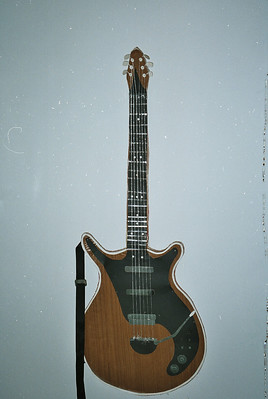
Cardpaper Red Special

Labels: ,

20.10.11

History Project

I enjoy writing the occasional bit of short fiction and have for ages. Most of them I 'publish' by blogging. Some however have been put in the publications of genre-specific groups such as the Fellowship Of Middle Earth (FOME) or the South Eastern Science Fiction Club. And then some have been written specifically for non-literary publications. This story (since edited for improved clarity) was written with choristers in mind (as was this other story from a while ago). As well as making fun of a persistent choral cultural meme, I also play with the shortcomings of history as an academic discipline, all within a science fiction framework.

Jasmin finished off her clone-cell roll and switched her cerebral interface back to study mode. Jasmin was one of the few students at Luna Uni to have refused the convenient bio-mod which allowed humans to photosynthesize all nutrients. She was a history student and enjoyed old-fashioned things like food. As she lay in bed Jasmin reviewed the notes she had amassed for her reconstructive history project.

Jasmin silently thanked the Universe for the Solar Flares of the Second Century Pre-Contact. The electro-magnetic pulses they had showered upon Terra had destroyed huge swathes of the purely electronic records of that narrow-minded period and historians were still working over-time to produce the best speculative gap-fillers for all the history that had been lost. Extrapolating unknown from known history was what Jasmin did best and she loved it.

Imlorho logged in and started a mental conversation with her. Jasmin was fond of the alien-exchange student, her project co-writer. Interaction with a totally non-human mind was always fascinating and in the case of Imlorho it was even better as it was from the entirely mechanical Centauri species. Jasmin was over her youthful xeno-crush on Imlorho now but they were still firm friends. Imlorho reported to Jasmin.

"I have retrieved data on a rare four-sex species as you requested."

"Fantastic Imlorho - give it to me."

Jasmin and Imlorho were examining an obscure Pre-Contact form of Terran known in the extant records as Choristers. They had been assigned the task of determining the nature of the four choral sub-classes and evidence was difficult to find. They had names - Soprano - Alto - Tenor - Bass - but scant other data. They were, however, pursuing an exciting new line of speculation.

Luna Uni had rejected explanations of segregation along economic or cultural lines and the most accepted thesis was that they were distinctions of religious rank. The Choristers had spent a lot of time occupying holy sites so a religious explanation was popular, but Jasmin felt that this overlooked something. Besides which, bold alternative reconstructions were the clone-cell roll of historical success. She and Imlorho were testing the proposition that Choristers had had four sexes.

They knew that distinct Terran settlements across the Galaxy supported varying numbers of sexes as determined by environment, technology and culture. Furthermore, the language utilized to describe the four choral sub-classes in historical data was reminiscent of the way gender roles had been described in Pre-Contact times. Imlorho went onto provide the latest information.

"The Gastropods of Epsilon Indi III have four sexes, the sperm-providers, the ova-providers, the cross-pollinators and the incubators."

Jasmin was interested in this alien model but wondered how to fit these four reproductive roles to the four choral sub-classes. She started thinking over the historical descriptions.

"Sopranos were garish and attention-seeking like peacocks... Altos were modest and dowdy like peahens... Tenors were scarce but vital to the group and moved quickly to-and-fro... Basses rarely moved and got sat on a lot."

Some linkages were forming in her mind, but Jasmin wanted more data to help secure the four-sexes argument, and some way of visualizing these elusive Pre-Contact Terrans would be useful.

"Imlorho, did you also find any imagery associated with the sub-class names?"

"I have located images of puzzling artifacts associated with the sub-class names - sending now."

Jasmin mentally stared at what was now in her mind. These were objects like nothing she had ever seen and stirred in her a mixture of wonder and consternation. She read the text accompanying the images.

"What in the name of the Five Civilizations is a saxophone?"

* * * * *

Jasmin had gone to the kitchenette to get another clone-cell roll to help her think. She sat back down and asked Imlorho to tell her just what these things were supposed to be. Imlorho obliged.

"Saxophones are pneumatic component parts for machines of unknown function. The important facts for us however are (i) the designations given to them and (ii) the practice from the era we are studying of naming some devices for the way they resembled particular Terran body-parts."

Jasmin was confused. "What practice?"

"On some computers sockets and plugs were designated 'female' and 'male' respectively."

"Right... so... what you're saying is that these saxophones look like the genitalia of the different kinds of Chorister?"

"Affirmative."

Jasmin looked critically at the saxophone images.

"I must admit the Soprano Saxophone is rather phallic..."

They discussed the images further. A size comparison image was particularly useful. They decided that the Alto Saxophone was reminiscent of an ovipositor while the larger Tenor Saxophone was a similar organ adapted for temporarily carrying and mixing genetic contributions from both a Soprano and an Alto. Finally the massive Bass Saxophone looked just right for allowing an embryo to gestate in it.

The picture of the four sexes of Choristers was coming together nicely thanks to the Saxophone images and the working model of the Gastropods of Epsilon Indi III. Their thesis was now that Sopranos were males, Altos were females, and Tenors were sterile females evolved to facilitate reproduction.

As a final bit of evidence to fit the picture, Jasmin recalled that Basses were known to emit low frequency sounds. Such sounds were soothing to the infants of many species and so that worked for the Basses as a form of mobile uterus.

Jasmin smiled inwardly at another job well done and got to work on polishing their argument for presentation. Imlorho meanwhile decided that the lustre of the saxophones would look good on its carapace and started the process of altering surface molecular structure to achieve the desired effect.

Jasmin approved of the end result. "Very shiny!"

For background on Jasmin and Imlorho see here. And just for the record - I am a bass.

Labels: ,

16.5.11

Living In The 70s

Monash University Choral Society (MonUCS) are holding a concert of choral adaptations of 1970s popular songs on Saturday 28 May. Our rehearsal camp therefore had a 70s costume theme and to inform members of that diverse yet now somewhat distant decade I prepared a very short potted history of the 1970s with a musical and cultural bent. In the interests of lazy blogging I now reproduce that writing here.

* * * * *

I’m living in the 70s
Eating fake food under plastic trees
My face gets dirty just walking around
I need another pill to calm me down


There is more to the 70s than the Skyhooks suggest in that verse and this hopes to give you a feel for the fun and varied cultural phenomena to come from that decade. Yes there were bell-bottom jeans and wide collars but there were also truckers and bikers and jet-packs!

It was an era in which the Cold War thawed somewhat (in a good way) while at the same time International terrorism arose to public prominence. It was a time of consumer kitch excess as well as economic recession and energy scarcity.

The good times and bad had an impact on art and culture which can be seen in the music of the time. In very different ways both metal and funk grew from 60s experimentation and explored the limits of experience. Later on punks raged at harsher developments in the world while discos provided a hedonistic distraction.

Many things we associate with the 1960s emerged from the counter-culture to become a part of everyday life in the 70s. Looking back at some of the kids shows from that time you notice a distinct psychedelic aesthetic (H R Puff N Stuff).

Finally they had nostalgia then as now which took the form of a sentimental look at the 1950s with things like Grease and Happy Days.

* * * * *

It was my hope to give a fuller sense of the 1970s in those few paragraphs than we tend to remember today and to imagine that my history major is of some use to me even now. The past - even the recent past - is fascinating.

Anyway I had a groovy time at camp which was cozy and mellow. I likewise expect our gig to be lots of fun. Even just rehearsing it is a blast. Come and see us!

Labels: ,

11.3.11

The Shadows In The Park

I have over time gotten more into the lyrics of songs. Never as much as many of my friends. I am perfectly content to never know or understand all the words of a song. But I appreciate the emotional impact a good line has on me. And that impact can happen even if I misunderstand the words. Here is one such misunderstanding:

The shadows in the park belong to yesterday...

That is what I had always assumed a line from Home by Jethro Tull was. It transpires that the line is in fact:

The shadows in the park were longer yesterday...

My version works much better for me. The words as intended simply refer to the passage of time. Mine evokes memory of past experiences. I imagine someone visiting their old neighbourhood and walking past a park in which they store some long-distant recollection. What are they remembering? Playing on the swings and missing the simplicity of childhood? Reclining on the grass with a long-lost lover and feeling a momentary frisson of that? Walking a family dog that has been replaced many times since and feeling a sudden pang of loss? For me the shadows are memory-images superimposed over the static scene of the empty darkening suburban park and it may in fact be too late for there to be many light-sharpened shadows.

I prefer songs that explore life in a frank way that recognizes the mixed experiences we have and seeks to come to terms with them. There are plenty with a dose of reality - these words come to mind:

And it seems such a waste of time
If that's what it's all about
If that's moving up then I'm
Moving out!


However I have an admission to make - I also enjoy the sentimental stuff that sells us a distorted image of life and love. I'm critical of songs as part of the culture - traditional and popular - that fills us with expectations that only sometimes work for us and yet I still enjoy silly stuff like:

And then I saw her face (da-da-da-da-da) Now I'm a believer!

How do I reconcile my critical perspective with my emotive joy at these songs? One thing to say is that I also like Star Wars and Lord Of The Rings even if I know that Jedi and Istari are imaginary. Standards can be suspended for fun now-and-then. But there is more to it than that.

Songs exist to help us tap into the experiences of others - I can seek to understand them even if I feel differently. I hardly need to fully endorse or believe every tiny thing that comes into my life. Okay Monkees take it away now! Dig that sweet mushy groove!

Labels:

2.6.10

Peace Post

My blogging content has been kinda heavy lately so I’m moving onto something more fun (but with a kernel of significance to it). Back in 1989-1991 the world changed just a bit more than it usually does. The Cold War ended with a flurry of seemingly spontaneous and generally peaceful revolutions. Another lingering concern for the world – Apartheid – also ended. I was of sufficient age to appreciate it and - of more personal impact - I got to meet relatives estranged till then by the Berlin Wall. The vibe of those changes affected some of the music back then.

I link to a few music videos here. They are nothing unusual for popular music of the time but I feel they all exhibit a sense of the times. There is a dash of the psychedelic in them (moreso in the imagery than in the music itself) as if to say that the desires of the late 60s had come to fruition. More importantly the words of these songs tell us of the fervent hope for a lasting change for the better. Here they are.

Beatfish: Wheels Of Love

Jesus Jones: Right Here Right Now


Lenny Kravitz: Believe

All these songs make me feel good you dig? But history never ends. Wars still rage here-and-there and weapons of mass destruction hang over the fate of humanity. As always we are a work-in-progress. I will end this post with a push for Nuclear Abolition Day. Peace out!

Labels:

22.12.09

Poster Post

I went shopping for some photo frames and while I was there browsed the selection of pop-culture posters in the same shop. It got me thinking on something I have been noticing for a while. If I wanted merchandise related to (say) The Rolling Stones or Led Zeppelin then chances are I will find them in any shopping centre. If however I want something relating to (say) Aretha Franklin or Stevie Wonder then I will have a hunt on my hands. I name these musicians because they are all of long-standing popularity and I'm a fan. But if supply-and-demand are anything to go by then I'm unusual in liking all of them.

So I got to wondering why this disparity of product availability exists. And my ironically self-described 'political correctness chip' sparked into life and told me that I was seeing evidence of racism – we in Australia prefer white over black artists it told me. But then I started asking if there were other distinctions between the artists named. Was genre the key factor here? The artists with all the posters and patches perform rock (and rock-derived music) while those of scant paraphernalia perform soul (and soul-derived music).

One test of this explanation was to consider a larger number of artists (while still confining things to classics). Lo-and-behold one can find consumer items relating to Jimi Hendrix (a black rocker) much moreso than Joe Cocker (a white soulter). I relaxed then – there is nothing the matter with preferring some genres over others. But then I started asking another question – why do we as a society show such a preference for some genres over others (particularly since they share a common musical heritage)? Possibly my original suspicions would play a part in the answer.

I may be indulging in gross generalizations here. Other factors include how popular an artist is overall or how iconic they became as a result of (say) living excesses and youthful deaths. The extended family of popular music is a complex one. And humanity cannot be understood in terms of the dichotomy I use except in some specific contexts.

Labels:

23.9.09

Grimm And The Blue Crown Owl

On the weekend I saw the gothic opera Grimm And The Blue Crown Owl at Street Theatre. It was performed by Australian National University (ANU) opera students of which Petra is one and it was original and engaging.

The music and story were written by one of the students. It was refreshing to see something new in what I think of as an old-world art-form. It was also nice that it was sung in English which surely made the convoluted plot a bit more transparent. I expected to understand even more of it but forgot that sung dialogue is more difficult to understand than spoken word (hence all those amusing misunderstandings of pop music lyrics).

Someone reminded me that convoluted and inane story is a part of the opera tradition and one goes more for the music. And the music was awesome. I lack the terminology but the music was a modern if still tuneful brand of orchestral music performed by a very together chamber orchestra and sung by the keen and talented students. They both sung and acted well and even those lacking key roles put in some fantastic acting of movement and gesture (gotta love scurrying like a rat).

I enjoyed the costumes which utilized a combination of purpose-made items and existing clothing in a very economical and effective way. A ruffled shirt would provide the chest of an anthropomorphic owl while a black leather jacket would do the same thing for the wings of a bat. The mad scientist lab rats were almost Gigeresque with exposed skulls and spines. The wise storks (of which Petra was one) were elegant in kimonos and waving wing-like fans.

The audience was packed, and I suspect this had something to do with the fact that the story had a contemporary setting, while still resonating with fairy tale themes. We got a mix of tragedy and romance with a smattering of comic moments and it was all good value. We also went to an after-party which is always a fun thing to do.

Labels: