Lazy Luddite Log

29.3.06

Advertising

Sometimes I think there is an advertising agent in my mind. Stupid advertising slogans will just come to me. Here is one.

Mocha - The power of coffee with the pleasure of chocolate!

Sometimes I go further and conceive of products whose design is dictated by a particular advertising slogan (the reverse of common sense). Consider this.

The mission statement of Herevale Shopping Plaza can be conveyed in just three short words: Fun... Food... Fashion... We have even designed the Herevale Shopping Plaza so that it becomes the living embodiment of this philosophy! Three distinct arcades form a huge triangular formation. Each arcade is filled with specialty shops dedicated to one of the three pillars of the Herevale Shopping Plaza mission: Fun... Food... Fashion... Then at the three intersections of the arcades we have a cinema and food court (Fun Meets Food) a supermarket (Food Meets Fashion) and a department store (Fashion Meets Fun). At Herevale Shopping Plaza you the customer can always find what you want - just say "Fun... Food... Fashion..."

Phew! I can almost feel a tiny pony-tail growing at the back of my scalp. Gotta go get some scissors. But joking aside yes it looks like I have been exposed to a lot of advertising in my life. And yet it has fallen far short of its function of driving my consumption. I'm a better browser than I am a shopper. Some seem to think advertisers are practically mesmerists but for me the biggest con they ever pulled was in convincing us of that very assertion. Deny them and the illusion falls away.

Labels:

9.5.21

Familiar Fictional Streets

I enjoy imagining all sorts of things. Sometimes they are what you would expect of an imaginative person - there are haunted fortresses and warp-drive ships. But sometimes they are far more mundane and today I will expand on the Shop Street Shops to describe the setting of an entire neighbourhood.

The Shop Street Shops are across the road from a small community park called Nextvale Square which sits at the centre of an old housing commission development of seven-by-seven blocks of residences. The seven shops are somewhat wider than many other such backstreet shops but also shorter from front-to-back. A narrow laneway separates the shops from the houses behind them and if you look over the back fence of those houses you can discover that they share one large back yard. The houses on this block are occupied by retired members of the Worldwide Order of Oddballs (WOOB). Front yards are separate but mask a very shared way-of-life for its occupants.

Nextvale Square itself features some shady trees, park benches, picnic shelter, drinking fountain (the new kind that includes a dog bowl) and a passive rain-driven water feature. Small public conveniences are open during the day. The shops are across from its southern perimeter. Across from its western perimeter is the Nextvale Primary Shool which occupies its entire block. Its library and basketball court face the park and after school hours are open to the general public (just ask the librarians for basketballs). Across from the eastern perimeter of the park is Nextvale Medical And Health Centre. This block includes a small indoor swimming pool overlooked by a gym. The eastern side of the park also sports a bus shelter for the one public transport route that connects this precint with larger centres. Across from the northern perimeter of the park are the only homes that face the park and the centremost of these is the Nextvale Neighbourhood House. It runs a number of short courses and hosts the meetings of a few local community groups. The rest of the homes on that block are small rental units still owned by the state.

Walk three blocks in any direction from Nextvale Square and you will come to the borders of the neighbourhood. Among these many houses are a few that offer professional services like lawn mowing and clothes alterations. There is even a canny accountant who realized shop hire is wasteful. The western boundary of this productive neighbourhood is the Tarmacadam Highway. Here are the westernmost homes of the neighbourhood but also a service station (including tool shop) and a pool hall (including band room). There may be warehouses or offices across the road but they are beyond the confines of this description.

The southern boundary is the Sluggish Creek track while the northern one is the embankment of the Herevale railway line. One can access bordering neighbourhoods via a foot bridge (south) and a pedestrian underpass (north) respectively. The creek and railway line run parallel to each other for five blocks but then gently curve inward to intersect some distance past the easternmost street of the neighbourhood. That arch-shaped parcel of scrubby land is the site of a former scout hall that now serves as home of the Herevale Naturalists (whose work takes them to open spaces in many locales beyond Nextvale) who tend a community garden there. The hall and its car park hosts a monthly swap meet and car-boot sale. Among the houses across the road is a bed-and-breakfast for the few visitors to the neighbourhood who cannot crash on the couch of a friend. The retirees who run it do so as a labour-of-love and for some extra income.

This makes reference to a Herevale that I name in some older posts. It draws on my past experience of wandering suburbia and visiting the neighbourhoods of friends. I was too lazy to draw a map but I think this tested my descriptive writing. What is it for? For its own sake I suppose. However it could always come in handy as the setting for an adventure of the kids-on-bikes sub-genre that has recently had a resurgence.

Labels:

15.9.14

Bring A Plate

The seed of this creative writing comes from the latter part of this post and then draws on this for its setting.

Herevale was a satellite town that had become a dormitory suburb in the metropolitan hinterland. In living memory an indoor shopping centre had been constructed in former swampland. It sported one department store, one supermarket, one small cinema, and scores of specialty shops. Many locals welcomed its convenience, but others derided its dedication to conspicuous consumption. Helina was one of them.

The erstwhile local drove into the Herevale Shopping Plaza car park, on a surprisingly sunny July morning, with a look of disdain on her face. She was attending an extended family gathering in the area and was expected to bring a plate. However, she had left too little time that morning to prepare a suitable contribution in her own studio apartment back in the City. As a result, Helina had to endure the shopping centre that, to her, was sterile and soulless (never mind that Helina had never accepted the existence of souls). She felt that older local shops had far more character, but did any of those still exist, or had the shopping centre sucked the life from them?

Isolated shops in back streets had been replaced by the anonymous offices of small-time tax agents who saved money on the deflated rents. The main street of town had ceased to be a shopping destination, but during the day it was busy with visitors to its civic services, like the public library, and during the night diners visited its several popular restaurants. The truth, then, was more complex than the detractors would have you think, but minimalist architecture and expansive car parks never did give a good impression.

Helina was a journalist and satirist who celebrated cosmopolitan culture and living a more authentic life. On many issues she was very insightful and provided a refreshing alternative to the credulous mass media. On some matters however she was blinkered. Helina rushed into the supermarket, mentally dismissing everyone she passed as a slave to consumerism and pop-culture, and almost bumped into a gangly, mature-aged man with a manila folder clasped in his hand.

Adriano was a local political activist and right now he was walking towards centre management with a full petition. He’d been collecting signatures calling on the owners to install recycling bins throughout the centre, rather than just along the food concourse. Adriano had some success in local matters, having agitated for library opening hours on Sundays. On another occasion he had been partly successful, hoping to protect an old Masonic hall from demolition, and pushing for its retention as a neighbourhood house. In that instance the best he’d managed was to have the front façade heritage listed, resulting in a set of studio apartments hiding behind caryatid columns and ornate masonry.

Despite his avocation, Adriano was shy and, mentally rehearsing what he would say to the office receptionist, had almost bumped into Helina. If only she knew Adriano, she would consider him an ally, but presently he was simply someone slowing her course through the garish distractions and piped music of the shopping centre.

Having finally purchased some food, Helina needed a coffee to compensate for having had to see all the junk that a family ahead of her at the checkout had been buying. She found a cafe, ordered a flat white, and sat down. It was then that she noticed a choir, singing close by. Apparently management had decided to celebrate Christmas In July to boost winter sales, and this had included hiring members of a university choir to sing carols. To Helina this was tiresome religious indoctrination, and she rolled her eyes while inhaling the fumes of her calming beverage.

Ironically, Kasey and Heng of the carolling group were thinking very much the same thing at that moment. Theirs was a secular choir, dedicated to beautiful music that, in past times, had been sponsored by religious authority and therefore had ecclesiastical content. They simply loved singing in close harmony. They were also there to make some desperately needed money for their community group and, in all honestly, to spend more time in each other’s company. Some of their peers had placed bets on how long it would take for the pair to communicate their mutual attraction. Kasey and Heng were seeing an Australian-made speculative fiction film at the cinema, after their gig, so maybe bets would be settled soon. On the other hand, one of them was an international student, so maybe they would shy away from a complex situation. If Helina knew of this heady life experience unfolding, she would tell them to give it a go, but she could not see past their black-and-white uniform to the cluster of human experiences beyond.

Helina then remembered the scratch on her sunglasses from her morning drive and, deciding to get replacements, walked to the department store. Her search for glasses took her past the small book department, and a young mother, Aroha, with her son Tama. Aroha knew that Tama was wild about pirates and wanted to encourage both his reading and an appreciation of history. Luckily, there was a plethora of illustrated non-fiction aimed at children, which drew the reader in with features like 3D glasses, and then subversively fed them facts. Pirates Of The Seven Seas In Three Dimensions presented case studies on historical pirates from all over the world. Aroha suppressed a small pang of envy, wishing that she’d had such books as a child, but even if they had existed, such things had only become affordable more recently. She overcame this feeling quickly, decided to buy the book, and focused on the fun they’d have reading it together.

If she had known of this story Helina might have been torn between lamenting the gimmickry of it all, and applauding the focus on education. However, she now had enacted her purchase and was making a hasty escape from this shrine to the almighty dollar. With her new shades on, further distorting her perceptions, Helina got back into her car and drove onto her destination, tut-tutting the ridiculous posters declaring the slogan of Food–Fashion–Fun that adorned every blank space. Fun my arse!

At the family gathering Helina entertained relatives with various truisms, many of them derived from op-eds she had written. One of her anecdotes related to travel and her assertion that it was important to get off the well-worn tourist routes and spend time with the locals. She had even done this in areas that were recovering from conflict or disaster. It was only if you did this that you discovered the distinct lives of the locals and the way in which culture develops in the most unusual settings. Life finds a way, she was fond of saying. Helina was so occupied with her conversation that she overlooked how much she enjoyed munching on the dolmades and stuffed olives she had bought, even if they had come from the Herevale Shopping Plaza.

Labels:

30.6.15

Scheduling Logan

Here is a short story that focuses on the same character as did this one. That one was written in 'second person' but the character observed by the reader was Logan. In this one I'm writing in 'first person' but from the perspective of several observers all (once more) focused on Logan. There is also a hidden interviewer and maybe that is 'you'...

I’ve been massaging Mr Mallee for a few months now. My name’s Peng and I run this shop. On first coming in, he told me he was looking for something to give his Mondays more distinctiveness than just shopping. Luckily he got me as his masseur because I have excellent English. He is rather chatty and the other staff always try to give him to me. He usually gets the neck and shoulders massage, which he says helps him, as he stoops too much when he sketches.

The first time he came in, he asked for the head, neck and shoulders massage, and I can remember his flinch of surprise on discovering that we masseurs consider the face to be a part of the head. I imagine getting fingers pressed into your cheeks was unusual for him. He might have even been embarrassed. Mind you Mr Mallee says embarrassing things sometimes, so I feel as if we’re even. He once commented that, at his age and in his circumstances, nobody touches him, and that our massages take care of that human need in him. I blushed a bit at that, but luckily I was standing behind him, so he never noticed. I think he meant it innocently, as he has also said that a massage is better than a haircut, but you never know with old men.

Mr Mallee definitely had a twinkle in his eye, and has asked me to call him Logan, but I prefer to keep things deferential. I can see that he could have been a charmer in his youth. I gather, from our conversations, that he is a widower, and seems content with his life, which includes a dog, a house and garden, and various activities throughout the week. I wonder what he did with his Mondays before my shop opened.

* * * * *

Mr Mallee comes in here every Tuesday to return and borrow books, sit and read some magazines, and use the Internet. My name’s Emmett and, here at the library, I run various classes in using computers, the Internet and genealogy databases. That’s how I met Mr Mallee, and it’s usually fun. I say usually because, during his first Internet lessons he was a difficult student. Rather than just say he needed help with something, he would criticize the interface design for its lack of complete consistency. The thing is, I agree with him, but I cannot do anything except show ways to work around the fact that, like anything that has been designed and redesigned over time, software will never make complete sense. That was a while back now, and Mr Mallee surfs the net with the best of them, and even gives others helpful hints.

The thing that drew Mr Mallee to our classes was his interest in genealogy. He had tried visiting church records, but confessed that churches had always made him feel like somebody was trying to sell him something, while here at the library he gets only what he’s looking for. Mr Mallee lacks any children of his own, but has plenty of family lost in time, as he likes to say. As he finds ancestors he then writes short bios for them, and even draws illustrations of what they might have looked like. In that sense, he uses one interest as an excuse to engage in another hobby. It’s a trick I should use more often, if ever I get the time. Maybe, once I’m retired I will take a tip from Mr Mallee on how to keep active. I’m happy that the Herevale Herald wants to make him the focus of a coming Local Characters column, and I hope it won't make him too self-conscious.

* * * * *

Mr Mallee comes to our weekly Chess tournament on Wednesday evenings. He’s never yet been invited to any of the smaller games run by private members. I think this is because he talks too much. I have tried to tell him that many of our members really just want to play Chess, but he says, Perdita, I'm giving them the chance to change, if they want to. Maybe some of them do want to, and I've noticed those that play with him are more likely to be middling on the extrovert-introvert scale. I’m one of those and, I’ll admit, he does have some interesting things to say. I’m into military history and so, even if I think his focus is more on cultural developments, we still have a common frame-of-reference.

Talking while playing reduces my effectiveness as a player, and I’ve sometimes wondered if chatting is a deliberate strategy of Mr Mallee. It certainly takes me longer to beat him than many other, technically better players. He’s still not accomplished, however. I think that, if we lived in an area that had those big park Chess sets, and excess players standing around chatting, that would be perfect for the old fellow. We’re really a bit too purist for him, and some of his comments put the others off. He once said he plays Chess to help stave off senility, and I could see several members looking on, aghast, because they suddenly had to think about what could happen to them later in life.

On the other hand, it is nice to have an extra member who’s prepared to do things like stack chairs or fill the urn at the scout hall we hire. Too many of the others arrive just in time to play, put their heads down over their pieces, then flee as soon as it’s time to tidy. I mentioned this to Mr Mallee and he says it’s a generational thing. I think he’s mistaken and it’s to do with temperament. I’ve been involved in other groups of young adults and they’ve been fine. It’s just this group, we’re different, and Mr Mallee challenges that.
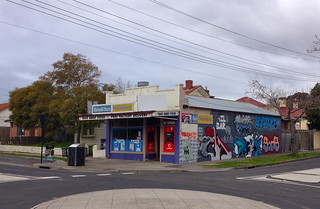
A Milkbar

Logan? Yes he comes to my milk bar to get bread and so on. He says he also visits the local shopping centre every week but that, by Thursdays, he needs to replenish supplies a bit. He ties his dog up to the bench outside and then walks in. Morning, Mandeep, he says to me, with a smile. Before he purchases his groceries, he often sits and orders a milkshake or an ice cream soda. Very few customers do that, but Logan says that such drinks are what make a milk bar more than just a convenience store. These small musings over words interest me and I think that, talking to someone like Logan is refining my understanding of the subtleties of Australian English.

I might also be learning some economics from Logan. He could get his extra groceries cheaper at the shops, but he says that he likes to put his pension into as many pockets as possible. This interests me, as so many his age want to keep every penny, but he says that spending some of his money helps keep the economy turning. I’m lucky he does. He lives almost as close to the shops as he does to me, so he actively takes a walk in my direction just because he likes the traditional milk bar, and for a small-time operator like me, every bit counts. Besides, it makes my day more interesting when I get a chatty customer like Logan.

* * * * *

Yes, Logan comes in here every Friday to try something on our menu. His favourite is the lamb kebab, but sometimes he will have the felafel or the barramundi. He says he’s been coming in here for years, since before this was Göker’s Grill. I’m Göker, by the way, and this is my shop. Great, hey? It was a fish-and-chip shop back in the day, and they served souvlaki, so it was a small step for me to get the locals to buy my kebabs. But we were talking about Logan, weren’t we?

Logan chats a bit, but he also just sits and watches the world go by. I think that’s why he has a coffee after his meal, since he’s already had a soda water with his food. Why? Well, the coffee gives him extra time just to observe. On a sunny day he’ll sit at one of our outside tables. My customers love it, ever since the council let us introduce al fresco dining on the footpath. So, yes, we talk a bit and then he sits and takes it all in. I guess he likes to think a lot, about the way the world is now, about how things have changed and, maybe, how things stay the same.

Why do I say that? Well, he likes history, and I know this because he’s complimented the photos on my walls of ancient Anatolian ruins. He looks at them and says things like, I wonder what an average day looked like back then. Are they shopping or making things or even just stopping to chat? I have to admit, I rarely think that way, unless something like a movie prompts me to, but Logan seems to do it a lot. He looks at things, then past and through and around them. He sketches, so it must be an artistic way of thinking. Me? I’m more focused on what I can see and do now. Hey, would you like something to eat or drink?

* * * * *

Logan is a welcome addition to our Shillelagh club. We meet every Saturday afternoon and I provide instruction to the members in use of a Shillelagh, or indeed any walking stick, as a martial art. On initially meeting, Logan noted that my name, Finn, is Irish, as indeed is the Shillelagh, and then went onto say that he had decided to join us to get back in touch with his Celtic heritage. Only much later he admitted that was just a throw-away line, and he’d never even seen a Shillelagh in his youth in Dublin. Rather, he was involved to keep himself limber and to get the blood pumping. I approve. He walks a lot, but walking only does so much for you.

We have a lot of older participants, and Logan is the oldest, but I forget that, because his mood is more optimistic than you would expect. He gets into a few polite arguments with some of the other retirees in the group, on the nature of the world. A few of them say they are here because they need to defend themselves, what with all the gang violence these days. Logan, refreshingly, reminds them how much more violent the streets, and indeed the pubs, used to be decades ago, when everyone thought that a punch-up was just what you did on a weekend. It’s good to have him there, because he helps to bridge the gap between our older and younger members.

I want to have a growing membership, and to do that we have to welcome a more diverse cross-section of the community. I learned that in the police force, which I only recently retired from. Some assume that we are a bastion of tradition but, if you’re the pillars of the community then you need to keep in step with that community, and Logan reminds me of that in how he lives. I wonder what he does on Sundays. He likes small things to make every day different but I get the feeling that Logan sets aside one day to do nothing and rest from his weekly schedule.

Well that took ages to do. I think I’m in the mood for less realist and more fantastical things at present. These interests seem to come in waves. I wonder what the judges of the Monash municipal short story contest will think of this one. And I too wonder what Logan does on Sundays.

Labels: ,